
The 1960’s have been full of lighthearted animal comedies in much the same way as the 1950’s were dominated by the same Western over and over again. This time around they’d try their hand at adapting their genre du jour into an animated feature. Whether this succeeds or not, it’s always nice to return to what Disney does best!

Disclaimer: This blog is purely recreational and not for profit. Any material, including images and/or video footage, are property of their respective companies, unless stated otherwise. The authors’ claim no ownership of this material. The opinions expressed therein reflect those of the authors and are not to be viewed as factual documentation. All photos are from Animation Screencaps unless otherwise stated.
After the dismal reviews of The Sword in the Stone, Walt decided he wanted a more active role on the next animated project. This is fitting, because it was to be his last animated project, as he died of lung cancer late into production. Veteran storyman Bill Peet (101 Dalmatians, Sword in the Stone) came up with the idea of adapting Rudyard Kipling’s Jungle Book stories after members of the team expressed a desire to do more animal characters. Unfortunately, Walt hated his take on the story. Hated it. Scenes like a human hunter trying to force Mowgli into burning down the jungle to protect the Man Village from Shere Khan or King Louie enslaving Mowgli were much too dark, so Walt kicked Peet off the project. In retaliation, Peet left the studio altogether, though he reportedly had no hard feelings as he praised his boss highly in the years to come.
To replace Peet, Walt turned to Larry Clemmons, who worked on The Reluctant Dragon way back when and a whole bunch of shorts. Allegedly, he handed Clemmons a copy of the Kipling stories and said, “here’s the book. Now, the first thing I want you to do is not read it.” He wanted the original stories to serve as an outline, nothing more, which shouldn’t be news because when have they ever followed the source material? He cared much more about creating a light, comedic tone and making the characters fun and memorable. If we cared about the characters, the story would follow, he reasoned. This worked to a point, but the ending caused a bit of a headache. Eventually, Clemmons came up with the idea for Mowgli to return to the Man Village because he fell in love with a girl. Animator and Old Man Ollie Johnston initially protested that it felt tacked on, but as he worked on it, he warmed to the idea. In the end, he conceded that it was the right choice after Walt’s personal nurse came up to him in tears after the film and said that the ending was perfect, exactly how Walt would have wanted to go out.

The period following Walt’s death infamously marked a downturn in the studio’s fortunes. Between the chaos of his passing and Sword in the Stone’s failure, the animation department could very well have been shut down if The Jungle Book wasn’t a hit. Luckily for all of us, it was a box office smash! It made a whopping $378 million on a $4 million budget, becoming the second highest grossing animated film to date in the U.S. and Canada. It did even better overseas- notably, it’s still the highest grossing film ever in Germany, surpassing even James Cameron’s smash Titanic! Critics loved it, too, though in fairness they might not have wanted to criticize Walt’s last labor of love in the wake of his passing. Still, they pointed to the simplicity, tone, and comedy as reasons why they enjoyed it so much, and though they admitted the plot wasn’t the best, it made up for it with the animation and the music. Gregory Peck, then the president of the Academy of Motion Picture Arts and Scientists, begged for this film to be nominated for Best Picture but was shot down. Not until 1991 would he get his wish for an animated feature to get that honor.
Reviews remain positive to this day, with an 88% on Rotten Tomatoes and a place in Steven Jay Schneider’s 1001 Movies to See Before You Die. Legends like Glen Keane, Brad Bird, and Andreas Deja cite this movie as the one that got them into animation. Tetsuya Nomura, the evil mastermind behind the Kingdom Hearts games, has called it his favorite Disney film, though it’s the first non-package animated film we’ve watched that doesn’t appear in the series at all (it almost showed up twice, but KH1 already had its abysmal Tarzan world and some backgrounds and assets can be found deep in the files of Birth By Sleep). It’s spawned not one, but two different Disney Afternoon cartoons, Jungle Cubs where the main animal characters are all kids and Tale Spin where they’re all airline pilots for some reason. I didn’t have Disney Channel as a kid so I’m mostly incredibly confused, but hey, people apparently loved that show. But that’s neither here nor there. It’s also been remade twice by Disney, once in 1994 and once in 2016. That’s not even mentioning all the other versions of the Mowgli stories that forget that King Louie was not a real Kipling character or that Baloo and Bagheera have actually swapped personalities.
There’s no doubt about it. This film is loved. And it’s not even by professional critics, either. All two of my most consistent reviewers put this high on their personal rankings of Disney animated classics (I should really get around to doing one of those someday). I even have a very good friend who named her cats Bagheera and Shere Khan. For these reasons, I’m almost a little ashamed to admit that I’m… not… super… into it. Don’t get me wrong, this won’t be a repeat of Peter Pan. There’s a lot of good here. It’s a very fun film! But if you’ve been reading much of this blog, you’ll notice that I tend to like the darker side of Disney. Films with deep characters, high stakes, and big emotion tend to score much higher with me. This is not that. So, while I’m grateful that once again Disney has escaped certain doom, I really don’t understand the hype.
Maybe a rewatch can change my mind?
STORY

The movie starts off on a long, Bambi-like pan through different jungle backgrounds we’ll see again later. Bagheera the black panther draws us in with some narration about the day he found a Man Cub abandoned by the river, Moses-style. If he doesn’t do something, the baby will starve, so he takes him to Raksha the mother wolf so she can shower him with her “maternal instinct”. Her Dalmatian puppies— I mean wolf pups, look on curiously as her mate Rama decides the Man Cub’s fate. Fortunately, Rama gives the okay and Mowgli spends ten happy years offscreen mimicking Wart from The Sword in the Stone. Yeah, the recycling in this movie is real. Not as real as some of the future releases, but it’s real.
All good things must come to an end. News reaches the pack that the fearsome tiger Shere Khan is lurking around the jungle, and he infamously hates humans. I don’t blame him, but this does put Mowgli in danger. Akela, the wolf pack alpha, declares that Mowgli has to leave the jungle to go back to the Man Village, and none of Rama’s protests can do anything about it. Bagheera volunteers to act as Mowgli’s bodyguard because apparently ten years in the jungle have not instilled in Mowgli any survival instincts whatsoever and the kid is dumb as a rock. Bagheera tries to explain to him the danger he’s in because of Shere Khan, but Mowgli just does not get it. He tries to tell him he needs to go to the Man Village so his own kind can protect it, but he just doesn’t want to. This early scene embodies the two biggest reasons I’ve never been able to connect with this film: one, Mowgli is infuriating and two, every time it sniffs too close to an emotional connection, it backs off. I don’t get the sense that the jungle is his home or the wolves (who are never mentioned again) are his family. I get the sense that he’s being contrarian for the sake of it. Bagheera finally puts his foot down and lifts Mowgli up a tree to get some sleep.

Not half a second after Mowgli whines that he can take care of himself, Kaa the gigantic hungry python slithers down from the branches. There’s some great character animation here, between the twisting coils and Mowgli defiantly sticking his tongue out at Kaa. Bagheera doesn’t think much about the voices he’s hearing, which gives Kaa the chance to turn his hypnotic gaze on Mowgli and give him a big old python hug. And my god has the weird part of the Internet ruined this scene. Never look up fanart of this movie. Ever. Also, all three of these actors are in the Winnie the Pooh shorts so that makes things awkward, too. Anyway, Bagheera wakes up in the nick of time to pimpslap Kaa, who turns to hypnotize the panther. Before he can, Mowgli just shoves him off the tree branch. Kaa slithers off with a knot in his tail, moaning and vowing revenge and making accordion noises. That should be enough to convince Mowgli that the jungle is too dangerous for him to stay but this kid still has no fear.
Thundering footsteps wake the dynamic duo the next morning as Colonel Haithi’s Dawn Patrol marches through the jungle. Ever curious, Mowgli goes down to try his hand at being an elephant. He quickly befriends Colonel Haithi’s little son because nothing is cuter than a baby elephant. The army comes to a halt to spew some jokes written by story guys joking about their own time in the army. Most of them are pretty funny, but there are too many of them and the sequence starts to drag after a bit. The gags do end when Haithi finally notices Mowgli sitting there and gets super offended that this non-elephant would dare join his troops. It probably doesn’t help that Mowgli still has no sense of danger or when to shut his mouth, but Bagheera steps in to stop Mowgli from getting himself smushed and whisk him off to the next setpiece.

In the grand tradition of Jiminy Cricket, Bagheera gets fed up with his exceptionally stupid charge and storms off. So Mowgli tries to fight a bear. As you do. This is some kind of syndrome, right? The complete inability to feel fear or comprehend consequences? It feels like it would be some kind of syndrome. It’s fine, though, the bear is Baloo and he’s nothing but friendly if lazy. He offers to teach Mowgli to fight like a bear and the two quickly bond even though Bagheera disapproves. After all, he has to take Mowgli back to the Man Village in case you missed that the first fifty times. Baloo is horrified and whisks Mowgli off to live in the jungle, teaching him about plants that don’t grow in Asia and how to get uncomfortably into scratching your back– you know, the bare necessities! The new best friends float down the river, so relaxed that Baloo falls asleep. A band of marauding monkeys swings in and snatches the Man Cub right off his belly. They can’t resist taunting Baloo and spouting bad puns as he tries to fight for Mowgli’s freedom, but he can’t keep up with them and soon it’s off to King Louie’s palace.
I’ll come back to this under characters, but you know how quick I am to call Disney out when they’re being racist. Here, though? I don’t see it. King Louie is a caricature of his (white) celebrity voice actor, same as Baloo and Shere Khan, who’s doing his normal voice and the same schtick audiences of the time would be familiar with. I know I don’t really have a voice in this conversation and I certainly don’t mean to disparage anyone who is offended, but Disney explicitly made changes to avoid accusations of racism. I can see why some would see things otherwise, but I really think this time, an orangutan is just an orangutan. It helps that this is by far the most fun sequence in the entire movie, with a song so infectious that even Baloo can’t help but get swept away and throwing Bagheera’s whole rescue plan down the drain. Louie thinks Mowgli can teach him how to make fire and tries to connive him into teaching him to be a man, but Mowgli doesn’t know how. Baloo bursts in to dance with the monkeys, dressed as a female orangutan, but the disguise fails and the chase is on! It’s literally the chase for the deed from The Wind in the Willows traced over, with sound effects ripped from Song of the South, but the energy is still high after Louie’s song that I don’t even care. Before long, the temple falls apart, Baloo and Bagheera get Mowgli to safety, and we never see Louie again.

While Mowgli sleeps, Bagheera viciously scolds Baloo for letting Mowgli get kidnapped like he didn’t straight up abandon the kid. Nope. All Baloo’s fault. If Mowgli doesn’t get to the Man Village ASAP, animals like those “undesirable, scatterbrained apes” will keep dragging him into random disconnected episodes and that would just be terrible. Sidenote, that line made me cringe. I don’t see Disney’s adaptation of the sequence as problematic, but Kipling’s original monkey scene reads as a transparent mockery of India’s untouchable caste so that word choice was an oof from me. Anyway, Bagheera realizes trying to convince Baloo of anything is like talking to a brick wall and stalks off again because that worked so well last time. Baloo tucks Mowgli into his bed of leaves, which is actually adorable, and Bagheera decides that maybe Baloo will listen better ten feet away.
The weird part is, it works. When Baloo hears that Shere Khan is after Mowgli, the chillest character in the movie panics, and you know it’s serious. After some more needling from Bagheera and the absolutely bizarre passage of time, Baloo finally agrees to try to talk to Mowgli. You’d think Baloo’s chill, carefree attitude would get through to Mowgli. Nope. We just have the same argument yet again. Baloo stalls as long as he can. Mowgli would rather chase a butterfly than listen. Baloo wants Mowgli to get to the Man Village because he’s concerned for his safety if he keeps trying to fight everything he sees. Mowgli doesn’t want to. Mowgli whines that he doesn’t want to. Mowgli tries to fight him then storms off in a snit to repeat the same walking animation for what has to be the fifth time.

Finally, after forty-five minutes of build-up, we meet Shere Khan himself, stalking towards a deer with exactly the sort of terrifying menace we’d expect. It’s an excellent character introduction, spoiled only by the most egregious piece of recycled animation in the entire movie. I’m going to talk about the recycling under artistry, but the use of Bambi’s mom goes past recycling animation. It looks like they cut out pieces of film, slapped some jungle ferns and stuff over top, and called it a day. You can tell she’s not from the same movie as the rest. It drives me crazy. A huge rumble scares off Bambi’s mom to get shot another day. It’s the Dawn Patrol again! Shere Khan gleefully eavesdrops as Bagheera asks them for help finding the little lost Man Cub. Colonel Haithi blusters and fumbles and does not get it, but hey, elephants are matriarchal and he’s not in charge here anyway. His wife Winifred confronts him and tells him to basically get his life together. The baby elephant’s pleas seal the deal and with a roar that makes Shere Khan wince, Colonel Haithi deploys his troops on their very loud secret mission.
The little lost Man Cub walks sadly through the jungle in the same exact way yet again. The walk cycle ends with him sinking down, so he does so at the base of a tree. Who should be waiting for him but more recycled animation— I mean Kaa? Seriously, so much of Kaa’s second attempt to hypnotize Mowgli is identical to the previous one. For once, Mowgli’s abject refusal to listen comes in handy, but Kaa promises that if he trusts in him, he can stay in the jungle for the rest of his life. Soon, he’s under the snake’s spell, which actually allows for some really neat animation and visual gags. Shere Khan hears Kaa singing his dinner into submission and knows he’s found his quarry. He rings the snake’s tail like a doorbell, leading to one of the best scenes in the film. The two villains play off each other so well, with Shere Khan’s smooth, suave politeness terrifying the sniveling stuttering snake as he tries desperately to make excuses and save his dinner. Not once does Shere Khan believe him, but he never really shows it through anything but smooth, British sarcasm. It’s marvelous. Unfortunately, they trip at the finish line when Kaa’s exit from the film reuses his exit from the first scene again.


A quartet of bored Liverpudlian vultures (yes, we’re going to talk about this) spot Mowgli repeating that same freaking walk cycle ugh-gain. They just can’t decide what they want to do so they flap down to roast the newcomer. It quickly becomes apparent that Mowgli’s not in the mood. His eyes fill with tears and he whines that no one wants him around and oh my god kid write on your Myspace and listen to MCR like the rest of us. Also, they didn’t kick you out, you ran away! That’s on you, boo-boo. Anyway, the vultures completely change their tune and do their best to cheer him up because that’s what friends are for! Mowgli decides he’s going to be a vulture now, because being a panther, elephant, and bear didn’t work out and he’ll try anything if it means not being a man. It’s a repeated decision told exclusively through physicality and I wish they’d doubled down on it a little more.
Shere Khan overhears the song and makes himself known at the most dramatic moment. He’s found the Man Cub at last. The vultures gasp in horror and retreat to their tree. And then we get the worst instance of Mowgli being a complete idiot in the entire movie, which is saying a lot. “Why should you run?” Are you kidding me? You should run because THAT IS AN ANGRY TIGER AND YOU ARE A TEN YEAR OLD WITH A STICK. Mowgli’s stupidity amuses Shere Khan so much that he agrees to give the boy a head start, which he does not take because he just that infuriating. At the exact second Shere Khan loses his patience and pounces, Baloo materializes out of nowhere to grab his tail. After all that build-up, after a legitimately terrifying start, our big climactic showdown turns into another wacky chase with Baloo clinging to Shere Khan’s tail for dear life and some quirky comments from the vulture peanut gallery. At least Baloo gets one great zinger that sums up the entire movie: “somebody do something with that kid!”

For the first time really all movie, we get some legitimate tension when Shere Khan shakes Baloo loose. His savage slashes and claws at him as lightning flashes in the background are legitimately unsettling, as is the pain of the big goofy bear we’ve come to love as he’s mauled. The vultures swoop down to carry Mowgli away from the carnage, but all Mowgli wants to do is save Baloo. It’s almost gutwrenching. So of course, we immediately run from it. Lightning conveniently strikes a dead tree in the middle of the jungle, sending it alight like it was doused in gasoline. Fire just so happens to be the only thing Shere Khan fears. While the vultures distract him, Mowgli ties a burning branch to Shere Khan’s tail. The fearsome tiger whose awesome presence has been such a shadow over the rest of the film panicks and bolts through the jungle, never to be seen again until the sequel. It’s super, super anticlimactic.
The jungle is safe again, but we can’t celebrate yet. Mood rain falls as Mowgli crawls over to Baloo’s body, begging him to wake up. Bagheera finally shows up (where the hell was he?) to explain the harsh truth to reality. Hold up. Is Mowgli just in denial, or has he somehow lived ten years in the jungle raised by wolves and not seen death before? I’m going to choose to believe the first. It’s less rage-inducing. Bagheera reveals that he does think quite highly of Baloo, as frustrating as he can be, and delivers a lovely eulogy and woah woah woah wait was that an emotional low? Well, we can’t have that. As Bagheera starts his speech, Baloo’s eyes flutter open, revealing quite early to the audience that he’s just fine. It’s quite funny to hear him drink in Bagheera’s praise, but it does shatter the scene. When he’s finished, Bagheera ushers Mowgli away from their ‘fallen’ friend, so Baloo asks the panther to keep going. He’s okay! Obviously! He plays it off like he was just taking a break, much to Bagheera’s frustration. And everything looks like it’s going to be okay. No one will ever separate Mowgli from his friends ever again.

Did I say ever again? I meant for the next five seconds. Somehow, we left the desolate clearing and returned to the depths of the jungle, and now we’re conveniently right next to the dreaded Man Village! All Mowgli’s fear and reluctance melt away when he sees a girl by the river fetching water. He’s immediately smitten, unable to take his eyes off her, and she’s very seductive considering they’re literally ten years old. Baloo is horrified, but Bagheera encourages Mowgli to follow her and soon he disappears within the Man Village gates. So, technically, our hero fails at getting what he wants. A+ storytelling. Anyway, Baloo gets over that really fast and soon, he and Bagheera saunter off into the sunset arm in arm singing The Bare Necessities. It’s a very, very rushed, tacked-on ending, and I’m really not sure how anyone looked at this and said it was perfect. But all right, then.
Don’t get me wrong, this is a very fun movie. The music’s great, the supporting characters and villains have huge personalities that leap off the screen, and it’s a nice way to kill 80 minutes. The problem is that that’s all it is. It’s empty calories. It’s the cinematic equivalent of eating pancakes: delicious and enjoyable, but I’m hungry again within the hour. There’s just not a lot of substance. One of Walt’s major storytelling principles was that for every laugh, there should be a tear. This script seems determined to avert that principle at all costs in favor of lighthearted goofy 1960’s Disney fun, to the point where it cheapens moments like Baloo’s death that should have weight. The characters know everything’s going to work out, so why should I care about them?
Two other big flaws keep this film firmly off my top ten Disney films. One is Mowgli, and we’ll get to that in a second. The other is the infuriating lack of communication that permeates every cel of this film. Don’t get me wrong, misunderstandings and miscommunications are a key part of most comedy, and I get that. It can work out quite well. What annoys me in The Jungle Book is that not only are the characters not understanding each other, they are openly, loudly refusing to communicate. Mowgli’s constant screams that he won’t go are the worst offender by far, but Colonel Haithi, Bagheera, and Baloo also function as roadblocks with their sheer stubbornness. It’s like they know the plot is so thin that they can resolve it really quickly in the last five minutes, so they have to stand in the way of any forward momentum at any cost.
CHARACTERS

Mowgli is the worst protagonist we’ve seen in an animated film since Peter Pan. He’s more passive than even Wart, shuffled from one set piece to the next with absolutely no agency. He’s not even a cipher, he’s a MacGuffin. He’s the thing we have to get from Point A to Point B that all the bad guys want and all the good guys need to protect. Moreover, he’s a MacGuffin that Won’t. Shut. Up. He’s constantly shrieking that he won’t go to the Man Village and he doesn’t care what danger he’s in and he wants to stay in the jungle and child we get it but we know you won’t do anything about it so please be quiet. He tries to pick fights with everything he sees, even the vicious bloodthirsty tiger he knows wants to kill him! And he has the nerve to play the victim about no one wanting to be around him, when we saw him run away from his parental figures who only have his best interest at heart. Ugh. Cannot stand this child. He takes youthful ego to an extreme that makes me really, really not care whether he escapes Shere Khan’s clutches.
Child actor David Alan Bailey (Trey Bowden on The Andy Griffith Show, also a random Scout in Follow Me, Boys) was originally signed on to play Mowgli, but his voice broke midway through production. They never learn, do they? Once again, nepotism won the day and director Wolfgang Reitherman brought in his son Bruce. Looks like they did learn something from The Sword in the Stone, because Bruce rerecorded all of the lines, and Mowgli blessedly only has one voice. Also, unlike his brothers, Bruce had some experience voice acting, which we will get to. Apparently he enjoyed the jungle so much that he became a nature documentarian when he grew up!

Baloo comes off as a commentary on hippies. Is that just me? He’s lazy, he’s super chill, he knows how to party, he’s known for his awesome music. Not to mention the fact that he’s always eating, which alludes vaguely to another less family friendly aspect of the counterculture. He’s a really fun character, someone you know gives the best hugs and will always be there for you. Not for nothing is he the most popular and enduring character in the film! I find his irresponsibility a smidge grating, just because he’s so laid back his laziness becomes something of a roadblock at times. But you can put the pitchforks away, it’s only a smidge. Everything else about him is incredibly endearing, and he and Bagheera balance each other out so perfectly that it keeps the irritation in check.
It was incredibly difficult to find a voice for Baloo’s big personality. They just couldn’t find someone who fit, until one night, Walt heard just the man cracking jokes at a party. That man was Phil Harris, a popular comedian and jazz singer famous for leading the band on The Jack Benny Program. However, he couldn’t get the script as written to sound natural, so he threw it all away and improvised the majority of his lines, paving the way for the likes of Robin Williams and Danny DeVito decades later. Walt liked his performance so much that he expanded a bit part just to get more of it into the film, thereby cementing Baloo as the movie’s heart and soul. However, as we saw with Fess Parker and Kevin Corcoran before him, there can be quite the downside to this kind of popularity. And of course, we will get there.

Bagheera is the strict dad to Baloo’s fun dad and come on you cannot in good conscience tell me you don’t get that vibe from them. It’s not subtext, it’s straight up text. Anyway, he’s a little bit of a stick in the mud but someone has to keep this story on the rails with all its sidetracks. He does so with such snark and wit that he easily became my favorite heroic character in this film. I can’t even blame him for storming off on Mowgli multiple times because that kid, man. That kid. As mentioned, his and Baloo’s opposite personalities provide both a ton of heart and some really solid straight man/clown comedy. They’re fantastic together. Bagheera is easily Sebastian Cabot’s best-known Disney role, because let’s be real, Johnathan Lyte from Johnny Tremaine was horrible and we all want to forget Westward Ho! The Wagons happened.


Colonel Haithi, Winifred, and Haithi Jr. provide comic relief and little else. Their scenes are pretty funny, with their tongue-in-cheek sendup of colonialism and the military and especially how utterly done Winifred is with her windbag of a husband. However, these scenes just never end. In a movie where precious little actually happens, they feel like a roadblock just to get us to feature length. Mostly, they’re notable for their voice actors. Junior is adorable, though, trying his best to be just like his dad who, while strict, positively adores him. It’s precious. Disney stalwart J. Pat O’Malley plays basically the same exact role (and rank!) as in 101 Dalmatians, though of course he was also Cyril in The Wind in the Willows and approximately half the cast of Alice in Wonderland. Haithi Jr. is played by none other than a very young Clint Howard of all people, known for being Ron Howard’s really weird-looking brother. Finally, Verna Felton bookends a long and distinguished voice acting career that began with the Matriarch in Dumbo with another elephant. She passed away just one day before Walt, and never lived to see her final performance. She will be missed!

King Louie ruffles a lot of feathers, as I mentioned above. However, like I said, I really don’t think he’s that bad. In fact, Walt actually made a conscious effort to avoid racial controversy by not going with the original choice of Louis Armstrong. He knew even then that casting a Black man as an ape in the middle of the Civil Rights Movement was not a good look. Instead, he cast white jazz superstar Louie Prima of “Just a Gigolo” fame in the role. Audiences of 1967 would have recognized his voice immediately, as he’s really just doing his normal voice and scatting as they would have seen him do on television and in live shows. They even incorporated some of his band’s real choreography and his thing for larger women into the story! Unfortunately, Prima’s star has faded somewhat and modern audiences tend to decry the character for exactly the things the studio didn’t want.
Obviously, as a white girl, my opinion means nothing, but I think it’s a shame that this scene gets so misunderstood. King Louie is a riot and by far my favorite thing about this movie. Not only is he hilarious, he’s kind of like an evil version of Baloo. Both are laid back but bundles of energy, though Louie’s kind of crosses the line towards manic. His desire to be human could have made him a really interesting arc villain in a different film– there’s a lot to unpack there. He wants power, more power than he’s capable of getting as an orangutan. He’s clearly knowledgeable about humans, though not as much as he wants to be. He’s willing to do whatever it takes to get what he wants– as affably evil as he is, he still very much ordered a child kidnapped. Paul Astell put forth a brilliant theory in his review of this film (which I’m borrowing with permission!) that King Louie was a maharajah’s pet, released or escaped into the jungle. That would explain so much about his character- not to mention what an orangutan from Borneo is doing in India!

Kaa has been completely ruined for me by the Internet as a whole and I am leaving that there do not Google it do not. I warned you. That’s all I can think of when Kaa is mentioned and I hate it so much. Even without that trauma, though, he’s super creepy in a way probably not intended by the filmmakers. Mind control has all sorts of terrifying implications, any way you slice it. Not to mention the whole ‘luring in a child’ thing. Once robbed of his hypnotic weapon, however, Kaa melts into a pathetic coward. That could have made for an interesting, layered character but we can’t have those in this movie. It’s been about sixteen years since we last heard Sterling Holloway’s unconventional wispy voice, but he’s back! And let me tell you, knowing who else Mowgli’s voice actor played makes his scenes even more unsettling than they already are.

Shere Khan‘s awesome presence looms large over the jungle before we ever see him. Everyone speaks of him in hushed, awed tones, terrified to even speak his name like an animal version of Voldemort. That mystique makes his appearance hit hard by the time he finally shows up, nearly 50 minutes into the film. It reminded me of the shark from Jaws, a bit. At first, he really lives up to that reputation. He’s chillingly suave and smooth, never raising his voice above a whisper yet sending the other animals into a panic just by sitting next to them. And then they trip at the finish line. Why would they make the final confrontation with this beast so largely comedic? Even his brutal beatdown of Baloo only lasts for a few seconds before one of the most utterly underwhelming villain defeats in the canon. Logically it’s no worse than Hook’s or Jafar’s, but he was talked up so much before that that it falls really, really flat for me.
What doesn’t fall flat is George Sanders’ delicious buttery smooth bass voice. He’s got the kind of voice that could read the phone book and make you hang onto every word. For all its smoothness it still manages to be chilling, and that’s no easy feat. I waxed poetic about how much I love his voice in In Search of the Castaways, and it’s still delightful here. He was actually the first Academy Award Winner to do a voice for a Disney film!
MUSIC

I’ve been hard on this movie so far because I hate joy, but one thing that’s impossible to find fault with is the music. George Bruns’ score creates a mysterious, exotic feel that lets you know from the start that this is not another European fairy tale. It’s not quite Indian, either, but it’s definitely different. Actually, the bass flute lines used here brought to mind Bruns’ Pirate Overture from the Pirates of the Caribbean attraction, which opened earlier this same year. Fittingly enough, the overture was written for the theme parks. Sort of. It appeared as Serengeti Serenade at Disney’s Ford Magic Skyway pavilion (which became the Peoplemover) during the iconic 1964 New York Worlds’ Fair. As characters are introduced, the slow smooth jungle mystique transitions almost imperceptibly into jazzy rhythms to match with the characters. Bruns also returned to some themes from previous Disney films to match the Reitherman era’s penchant for recycling. Notably, Baloo’s argument with Mowgli uses a sad theme that appeared in both Sword and the Stone and Dalmatians, and Baloo’s funeral is underscored by Chorale For Snow White. Once you hear that last one, you can’t unhear it, let me tell you.
The original Bill Peet script featured several songs by Terry Gilkyson, who wrote the appalling theme songs for The Three Lives of Thomasina and Savage Sam and the okay one for The Moon-Spinners. The guy’s track record isn’t stellar, that’s all I’m saying. His deleted songs for this film are all right (Shere Khan had a villain song!), but for the most part, I’m glad he was replaced. This is actually my favorite Sherman Brothers soundtrack, which says a lot considering how blah I am about the rest of the movie. Infusing the Indian jungle with a jazz beat sounds weird on paper, but they blend the two seamlessly and produce no less than five stone-cold classics. Still, Gilkyson struck gold for the first time, too, as we’ll soon see!

Colonel Haithi’s March is a bright cheerful tune with a highly hummable melody. The lyrics not so much, but when you really listen, they’re a very clever parody of the same military marches that characterized much of Mary Poppins’ soundtrack. These elephants don’t want to be there, no matter how rigidly they obey Colonel Haithi’s fanatical devotion to randomly walking around the jungle. The disconnect is very, very funny. Add to it Haithi Jr.’s adorable interjections as he repeats his dad’s words and you get a rather underappreciated little gem.

The Bare Necessities is the last remnant of Gilkyson’s soundtrack and, ironically, the best known song in the film. He may not be a great songwriter, but he hit it out of the park with this one and, judging by the fact that the last half of his IMDB is nothing but various usages of this song, set himself up for life. It’s our first jazz number, masterfully showcasing Harris’s musical talents with fantastic, unique rhymes like “necessities/rest at ease”. The instrumental breaks, especially for the scratching segment (even if that whole bit is a little weird), are a lot of fun and create a distinct big band feel that perfectly encapsulates Baloo’s character and the movie as a whole. It’s popular enough to have been covered by artists as diverse as Bowling For Soup, Harry Connick Jr, and Brian Wilson of The Beach Boys fame, and it remains one of the most enduring things about this movie.

I Wanna Be Like You may not have aged well as Walt hoped, but it’s still my favorite song on this soundtrack. It’s just so much fun! It’s the most upbeat villain song in the canon and an easily singable one until it stops being words and starts being a whole lot of high-energy scat. I love it so much this review inspired me to check out some of Louie Prima’s other work— and it all sounds exactly like this! The Sherman Brothers knocked it out of the park writing something within their celebrity voice actor’s repertoire. Even the animators got into the fun, working in some of the choreography from Prima’s live shows into the animation, like the trumpeting conga line in the image above. The song builds up to the scat finale between Baloo and Louie, in which Harris and Prima buzz with electric chemistry. That’s no easy feat, considering scheduling conflicts kept them from actually recording together! Harris just recorded responses to Prima’s lines, and the end result is magical.

Trust in Me kind of freaks me out for the same reason I mentioned in Story and in Kaa’s character description. That’s not even a bad thing, though, because it’s a villain song and they’re supposed to be creepy. Maybe it’s because I wrote this review shortly after Halloween, but it made me think of a prototype version of Come Little Children from Hocus Pocus. Both songs are slinky and seductive, beckoning the listener to come closer so the singer can devour them. It’s super unsettling in the best possible way. The animation, too, is matched perfectly to the lyrics to create some really interesting visual puns, like when Kaa sings the word “around” and twists into a loop. This song was actually written for Mary Poppins of all things as a song called Land of Sand, in which Mary Poppins took the kids to the desert (among other places) with a magic compass. The sultry melody and exotic instrumentation fit much better here!

That’s What Friends Are For went through a lot of changes during production. Originally, the team wanted The Beatles to sing a pop-rock tune, but this was around the time John Lennon’s ego started to swell. Reports on why are a little conflicting, but it seems as though he thought doing an animated film was beneath him and flounced off to do Yellow Submarine. Or maybe he knew that in the next few years the band would break up at Disney’s own Polynesian Resort? Either way, the idea fell through and Walt asked the Shermans to change the song to a more timeless barbershop quartet. The harmonies we ended up with are lovely, and the tone change works really well to mark the exact moment when Mowgli cheers up. And speaking of refusing to do this song, George Sanders reportedly refused to sing, so his chilling final line was delivered by Bill Lee of the Mellomen, who also sang as Roger in Dalmatians.

My Own Home is an absolutely exquisite melody. It’s as seductive and mysterious as Trust in Me, with the return of the bass flute and Darleen Carr’s lovely, husky vocalizations wordlessly drawing the viewer in. That tune is repeated throughout the score to the rest of the movie, so that its reappearance feels like a musical culmination of everything we’ve seen so far. As unsatisfying as I find the ending, I can hardly fault the Shermans and Bruns for that. But then she starts actually singing. And hoo boy, those lyrics. Remember, this happened directly after the Summer of Love. Lauding traditional gender roles like this really feels like they’re telling audiences, “boys can go on awesome adventures in the jungle but girls have to stay in the kitchen”. I doubt that was actually the intent, but in a movie with only two female characters period, it’s not a great look. Still very pretty and hummable, though!
ARTISTRY


Unpopular opinion: I don’t like the look of this movie at all.
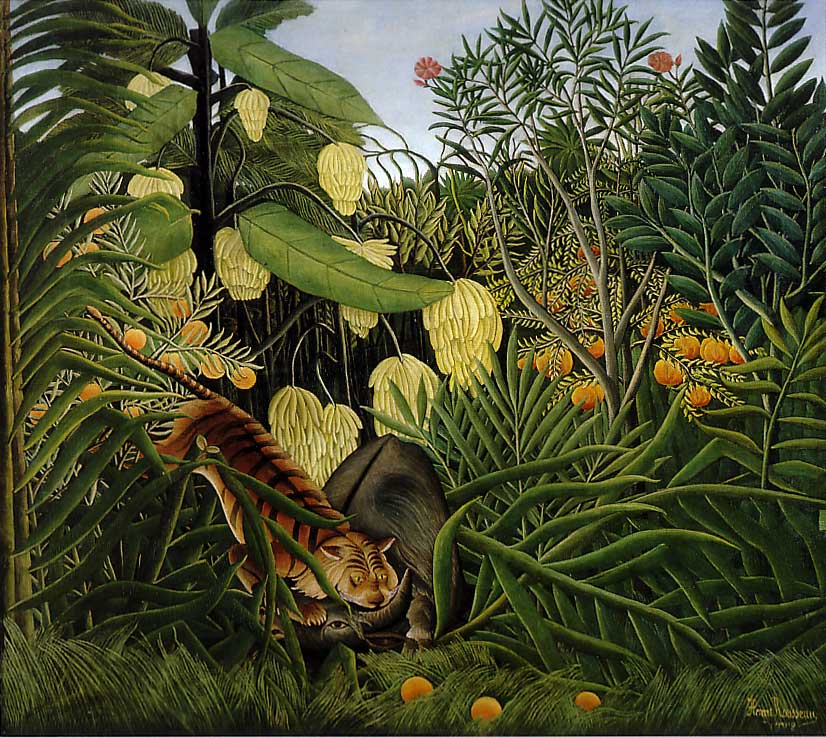
The backgrounds are lush and beautifully detailed. You really get the sense you’re delving deep into the jungle, helped along by some of the first multiplane shots we’ve seen in quite some time. For the first time in a while, they traveled to their real-life setting (India) to ensure that the backgrounds looked as realistic as possible. They even incorporated some live-action footage of Angel Falls in Venezuela, much more seamlessly than that one snow drift in Dalmatians. The dreamy, impressionistic style was inspired by Henri Rousseau’s jungle paintings, and you can really see the similiarities when you know they’re there.
The character animation is top notch, too. Disney has been known for their realistic animal movement since the painstaking research that went into Bambi, but they outdid themselves here. Animators studied the movement of real animals during the filming of A Tiger Walks and Jungle Cat, perfectly replicating the movement of the animals’ muscles and joints to the point where you almost forget they’re cartoons. But of course, they are, and they used that to their full advantage. The animal characters use their unique body shapes for a variety of great visual gags, such as Louie picking bugs out of Mowgli’s hair or jump-roping with his long arms, or Kaa twisting his long body to make up for the lack of expressive limbs. You can also see in them caricatures of their voice actors. For example, look at George Sanders, then look at Shere Khan’s large jaw and nose.
So what’s my problem?

The two don’t match at all! The lush, detailed backgrounds and scratchy, flat-colored characters don’t look like they inhabit the same world. More than once, characters seem to be floating over the logs or ground they’re walking on. Remember how I said in Dalmatians that the Xerography look worked really well in that movie? Well, this is what I meant. Here, the stark disconnect between the environments and their inhabitants took me out of the movie. There’s no illusion of life here. You can tell these are drawings being flipped across other drawings, which isn’t a feeling I ever want from a Disney movie. Look at Mowgli’s feet in that picture. Do they look like he’s actually got weight and presence on that log? No. No they do not.
Another feeling I never want from a Disney movie is cheap. One of Wolfgang Reitherman’s trademarks as a director is his penchant for recycled animation. Now, this didn’t actually save money and was reportedly a real pain in the neck for animators, so it wasn’t actually cheap or lazy. However, it looks cheap and lazy. Reitherman’s rationale for this makes it even worse– apparently, his philosophy was that if a gag worked once, there was no point in trying something new. What?! What happened to innovation? What happened to ‘keep moving forward?’ It would be bad enough if they just borrowed gags and movement from Dalmatians or Wind in the Willows, but they cannibalize sequences from this same movie over and over again! Every time Mowgli storms off, it’s the exact same walk cycle: walk with his head down, arms swinging, throw a rock, sink to the ground. Kaa’s two scenes are identical. Bagheera slinks across the branches in the same way three or four times. It’s exhausting, and there’s really no excuse for it.
THEME PARK INFLUENCE

This movie’s incredibly popular, but weirdly enough it doesn’t show up that often in the parks. It’s there if you know where to look, though! Walt Disney World’s Pop Century Resort, where each building is themed to a different decade, features a larger-than-life icon of Baloo and Mowgli outside of its ’60s themed buildings. Also in the world of hotels, Hong Kong Disneyland’s Explorers’ Lodge has wings themed after Asia, Africa, Australia, and South America. The Asian Gardens are also known as the Haithi Jr. Gardens, featuring elephant topiaries and silhouettes of the littlest recruit in the elephant army in the detailing around the rooms.
The Jungle Book appears with some regularity in parades and fireworks shows around the six resorts. Baloo and King Louie are popular meet and greets (though Animal Kingdom discontinued them not too long before the COVID closure), and even Mowgli makes infrequent appearances. The Bare Necessities and I Wanna Be Like You show up in shows like Mickey and the Magical Map and Walt Disney World’s Fantasmic. Speaking of Fantasmic, Disneyland’s version has a 100-foot-long Kaa puppet that slithers across the stage to mesmerize the audience. Kaa also represents the Chinese Zodiac’s Snake at Shanghai Disneyland’s Garden of the Twelve Friends. Finally, Disneyland Paris’s Adventureland includes a quick service eatery called Colonel Haithi’s Pizza Outpost!
This isn’t there anymore, but in my research for this blog, I discovered an opening day show at Animal Kingdom called Journey Into The Jungle Book. It lasted a little under a year before being replaced by Tarzan Rocks, which was in turn replaced by Finding Nemo the Musical. I’m not surprised it was replaced, because it is the worst thing I have ever seen. Please watch it. I can’t be alone in my suffering. Highlights include Bagheera’s costume straight out a of Claire’s store, a grown man trying with all his might to look ten, and whatever on earth that thing is fanning King Louie. Really, all of I Wanna Be Like You is a travesty.
FINAL THOUGHTS

Walt got what he wanted in his final animated feature. He specifically requested a lighthearted, fun movie with memorable characters and nothing too heavy. And in that respect, it’s great! But it’s not really my cup of tea. I like the heavy stuff. Not to mention that this movie clearly would have benefited from coming out pre- or post-Xerography, when they could match the characters to the background a little more seamlessly. Yet this movie’s fantastic soundtrack keeps me from truly disliking it. I may not consider it a favorite of mine, but I can still understand why others like it! And besides, this is far from the worst the Xerography days have to offer. Buckle in, kids, because without Walt at the helm, things are about to go sideways. I’m not exaggerating when I say that there is exactly one movie I know I like between now and the mid-80’s!
Favorite scene: I Wanna Be Like You. I usually try to refrain from picking a musical number because I feel like it’s cheating, but the songs are by far the best thing about this movie and that one is the banger to end all bangers.
Final rating: 6/10. There’s a lot to like, but it doesn’t really feel like a finished product.
On a personal note, I got called back to the magical world of hotels! I have my old job back… but it’s in a different place with different hours. I wrote most of this review while trying to adjust to working the overnight shift for the first time, so if I come across as a little loopier than normal, it’s because I am. Send help. And coffee.
EDIT FROM THE FUTURE: Somewhere around Oliver and Company I decided I was going to get back into my old singing hobby. So here’s my cover of Trust In Me!
 The Great Disney Movie Ride

Thanks for the shout-out! And congrats for getting back to work, even if the hours aren’t ideal. I’m stuck in a supermarket most evenings, so I know the feeling.
I totally get you not feeling this one, apart from the music it’s so vanilla. Baloo is easily my favourite thing about it! “You better believe it and I’m loaded with BOTH!” And that scene between Kaa and Shere Khan really is wonderful, even if Kaa does make me a bit uncomfortable (turning him into Scarlett Johannsen did NOT help lessen that seductive vibe, by the by). The only thing creepier than the fan art of him is that of Ariel and Louie…
Anyway, I only ranked this one around the middle myself, it’s not top 10 material. Can’t wait for you to get to the renaissance, although I know it’s still a few decades off! (Very curious about your one liked film in the next decades… I can think of two animated ones that I’m fond of, but I’ve not seen much live-action from this era).
LikeLike
Of course! Thanks for letting me give you a shoutout! Thanks for the congrats! I miss people but the pay and the hours are sooo much better than what was keeping me fed during the closure.
The plot is so pedestrian, and as great as the characters are, I’ve seen them all before. Baloo is a lot of fun but even then that’s largely because of his voice actor and knowing what this movie started for him kind kill him for me. Honestly I think the 2016 version saw what the Internet did to him and doubled down on the seduction factor, rather than trying to eliminate it. Why did you remind me that Ariel/Louie was a thing? Why?
Oh, really? I was going by you rating it 4/5 lol. I can’t wait to get to the Renaissance either, and watching the sequel to this only reminded me of why. The one movie I like in the 70s is animated, as I think I’ve only seen one live-action coming up. That doesn’t mean none of the live actions will be good, but I’m still gearing up for a looong decade while the studio finds their footing!
LikeLiked by 1 person
Yeah, I think it’s sitting at something like number 27, so I like it but don’t love it. I only really knocked a point off for the recycled animation at the time, but when it came to ranking it I felt like it had to be lower.
I’ve only seen one live-action from the 70s too, and let’s just say, I prefer the Drunk Disney video about it to the film itself…
LikeLike
Fair enough!
If it’s the same one I’m thinking of, yeeeah. That film has some good tunes but the story is so bleh.
LikeLiked by 1 person
Great review as usual!
“All two of my most consistent reviewers”, am I one of them, lol?
I take it you’re not a fan of Mowgli, lol. I don’t feel the same way about him, but I can understand somewhat since that’s pretty much how I feel about Vanellope in Wreck-It Ralph.
YES, YES, I’M SO WITH YOU ON KING LOUIE AND THE “RACISM” SEEN IN HIS SCENE! I’ve never felt the scene was being racist to African-Americans and always saw it as a parody of Louie Prima and his band and swing music, itself. Especially with Walt going out of his way to not hire Louis Armstrong for the role. The thought of this scene even remotely being racist never crossed my mind. The thread of an iota of an idea of a thought of this scene even remotely being racist never crossed my mind. It was only until recently with the Internet did I find there’s an opinion of this scene being construed as racist and I like you believe it’s a scene that’s been very misunderstood.
Shere Khan is my #1 favorite Disney villain, mostly for his suavity. I’m a huge fan of suave, gentlemanly, villains.
I didn’t know about Phil Harris improvising much of his dialogue, that’s cool.
I’m not gonna Google Kaa pics, I don’t want to find some DeviantArt that I don’t want to see, lol!
LikeLike
Naturally!
I just find him annoying especially since he’s surrounded by so many better characters.
I can see why people would see it that was at first glance but it doesn’t stand up to research. Walt went out of his way to avoid these claims and honestly, if someone sees cartoon monkeys that way they might be the problem.
I am too (see: the sequel review), but Shere Khan doesn’t do it for me idk why.
Mmhm! He led the way for Robin Williams to do the same in Aladdin!
Yeeeeah
LikeLiked by 1 person
May be one of their lesser classics, but there is a reason why it has endured for so long.
LikeLike
For sure! Don’t get me wrong I do like it fine (except Mowgli), I just don’t love it like I do Sleeping Beauty or Dalmatians!
LikeLike
I have mixed feelings on this film. While I’ve never read a Kipling story outside of Rikki-Tikki-Tavi, I do get the gist of what the Mowgli stories are supposed to be like. In comparison to the Kipling books (even from someone who’s never read ’em), this is garbage and a horrible adaptation. But as its own thing? Not the best thing if you’re looking for drama, but as a lighthearted comedy, it’s pretty good.
When it comes to characters, my favorites include Tabaqui (who I’ve only seen in The Jungle Book: Mowgli’s Story (also by Disney, though it’s direct-to-video) and the 2003 3D TV series), Kaa (moreso the more serious portrayals), and Shere Khan. The wolves get straight up neglected in this movie. Kid, you were raised by them for 10 years, why don’t you ever once talk about wanting to stay with them? Hathi & Winifred are quite funny (from what little I remember of them), while Hathi Jr. is straight up adorable.
I’ve never seen Jungle Cubs, but I’ve seen one or two episodes of TaleSpin. As I said about 101 Dalmatian Street, I don’t like spin-offs, so I really have no idea how it’s popular. I guess people enjoy character comedy more than trying to continue the story.
Disney did a few other adaptations of the Mowgli stories, and while you (and the majority of the world) hate The Jungle Book 2, it is nothing compared to Rudyard Kipling’s The Jungle Book. Seriously, I was compiling a list of Jungle Book movie and TV adaptations today (technically yesterday), and every time I think of Rudyard Kipling’s The Jungle Book, I mentally request a loaded gun. I guess it ain’t so bad if you look at it as its own thing rather than an adaptation, but still. As for The Jungle Book: Mowgli’s Story, while it’s definitely kiddish, it’s definitely got this rather sweet charm to it (plus it’s the only time Tabaqui ends up in a Disney movie, albeit as a spotted hyena rather than a golden jackal (unless you count a human named Tabaqui from Rudyard Kipling’s The Jungle Book)). And of course, there’s the 2016 remake, which. I. LOVE. It hits the perfect balance between this movie and the books (if only it had Tabaqui).
LikeLike
Something I respect about this and other unfaithful Disney adaptations is that it’s not afraid to go all the way with turning it into something unique. Also, Kipling’s stories aren’t that engaging for the most part and he wrote White Man’s Burden SO. Have at it , Walt. I generally prefer a good mix of drama and comedy to pure comedy and this is no exception, but the songs help it a lot. I don’t love it, but there are worse ways to spend 90 minutes!
Tabaqui wasn’t in the stories I read (must have been from the sequels), but the best kind of villains is more, I always say! The wolves got the raw deal. That’s one thing I liked about the otherwise lackluster 2016 adaptation- the wolves actually feel like Mowgli’s family and not just throwaways. At least mention them, kid, come on.
Nostalgia is a powerful thing, I guess? Idk, my dad didn’t like me watching “boy things” when I was Disney Afternoon age (yeah, I know), so I don’t have a horse in this race.
I know at least two other versions are on my list so watch this space!
LikeLike
Funny, I have a read a little of Mowgli’s Brothers, and Tabaqui’s right at the beginning to tell Father Wolf and Raksha that Shere Khan’s changing his hunting ground for the next month.
LikeLike
I mean, it’s been about eight months since I read it so there’s a non-zero chance that I just forgot lol
LikeLike
Tabaqui was in the TV special adaptation animated by none other than Chuck Jones. Because this was a Chuck Jones design, you keep expecting him to introduce himself as “Tabaqui, SUPER Genius.”
Anyway, Disney did a sequel to Jungle Book years before its direct-to-video one…on a record album! More Jungle Book had the voices of Phil Harris and Louis Prima, reprising their roles, but not Cabot, and Ginny Tyler voiced Mowgli. It dealt with the jungle friends bringing Mowgli back for a visit, since Baloo was really down in the dumps without his pal. It was pretty good and had more credence as a sequel given it had some of the original voices. Best of all, it gave King Louie a really catchy and funny song:
“If you wanna see some strange behavior/Take a look at Man!/Gotta give the prize for strange behavior/To the people clan!/They lie, they cheat, they overeat/They knock each other flat/Tell me, have you seen another animal/Act like that?”
LikeLike
That song sounds familiar, there’s a VERY similar one called Peopleitis that was cut from Prima’s would-be character in The Rescuers. Maybe they retooled the idea?
LikeLiked by 1 person
I’ve been a fan for a long time, but have never made an account until recently. I guess I should start by commenting on this review, as the Jungle Book was the first Disney movie I ever saw. While I love this movie, I agree with most of your criticisms. Objectivity, it is not a great flick, I just love it due to nostalgia. The soundtrack remains dope to this day though, as do the villains. Great review.
LikeLike
Thank you! Welcome to this crazy ride! The soundtrack is the best thing about this movie imo, but I totally get that it’s a nostalgic one for a lot of people!
LikeLike
I just rewatched this one, and I pretty much agree with everything you said.
Going back to it after over 20 years, there’s just not a lot here. The songs are great and the voice acting is really strong, but the story badly lacks any real stakes or momentum. I don’t mind that it’s not dark, necessarily – I mind that it’s not exciting. And the fake-out with Baloo’s apparent death is just annoying, because he’s so obviously fine (and totally fine, not even banged up).
Pardon the pun, but Shere Khan was really a…paper tiger.
Honestly, the 2016 version might be better. I haven’t seen it since it was in theaters, but I remember it having more weight, more real drama and tension, and having a much more sympathetic Mowgli. If they’d just included all the songs (and done a better job with the ones they kept), it would’ve blown this version out of the water.
LikeLike
It’s a very weird choice to make this story so light and fluffy. Having a child stalked by a murderous tiger with a grudge should be exciting and it’s just… not. I feel the lack of stakes in most of Reitherman’s work, but it’s bad here because it feels like it should be so much more.
I’ve seen the 2016 but not recently enough to agree or disagree. I do think it was one of the less bad remakes but considering my vendetta against the remakes in general that’s not saying a whole lot
LikeLike
First off, loving the site. Just a quick point of clarification – Bill Pert definitely did not think highly of his boss after he left. His autobiography is one of the few first hand accounts of Walt that paints him as an egotistical tyrant.
It’s actually rather comical to see the lengths Bill went to demonstrate his disdain for Mr. Disney
LikeLike
I’d love to point out that ‘sad theme’ in Dalmatians, Sword, and this film is Samuel Barber’s Adagio for Strings (or in the choral setting “Angus Dei” – Lamb of God). It’s widely am considered to be the saddest piece of music ever written.
So yeah, when something sad happens an animated Disney movie of this era, I always chuckle that the composer reunifies the same theme from literally the saddest music ever!! Lol
LikeLike
I never got the attraction of this one, although I loved the 2016 remake; it made Mowgli a far more sympathetic and active character and the final climactic fight was pure awesomeness! I think the biggest issue for me as a kid was that Mowgli left the jungle. To me, that was a huge Downer Ending.
LikeLike
Not just left the jungle, but left the jungle for a girl he doesn’t know. Maybe it’s just me being aroace on main and not understanding the Power of LoveTM but like… you’re ten? But mostly I just find Mowgli insufferable. It is one of the better (read: only good) remakes, though, I will admit
LikeLike